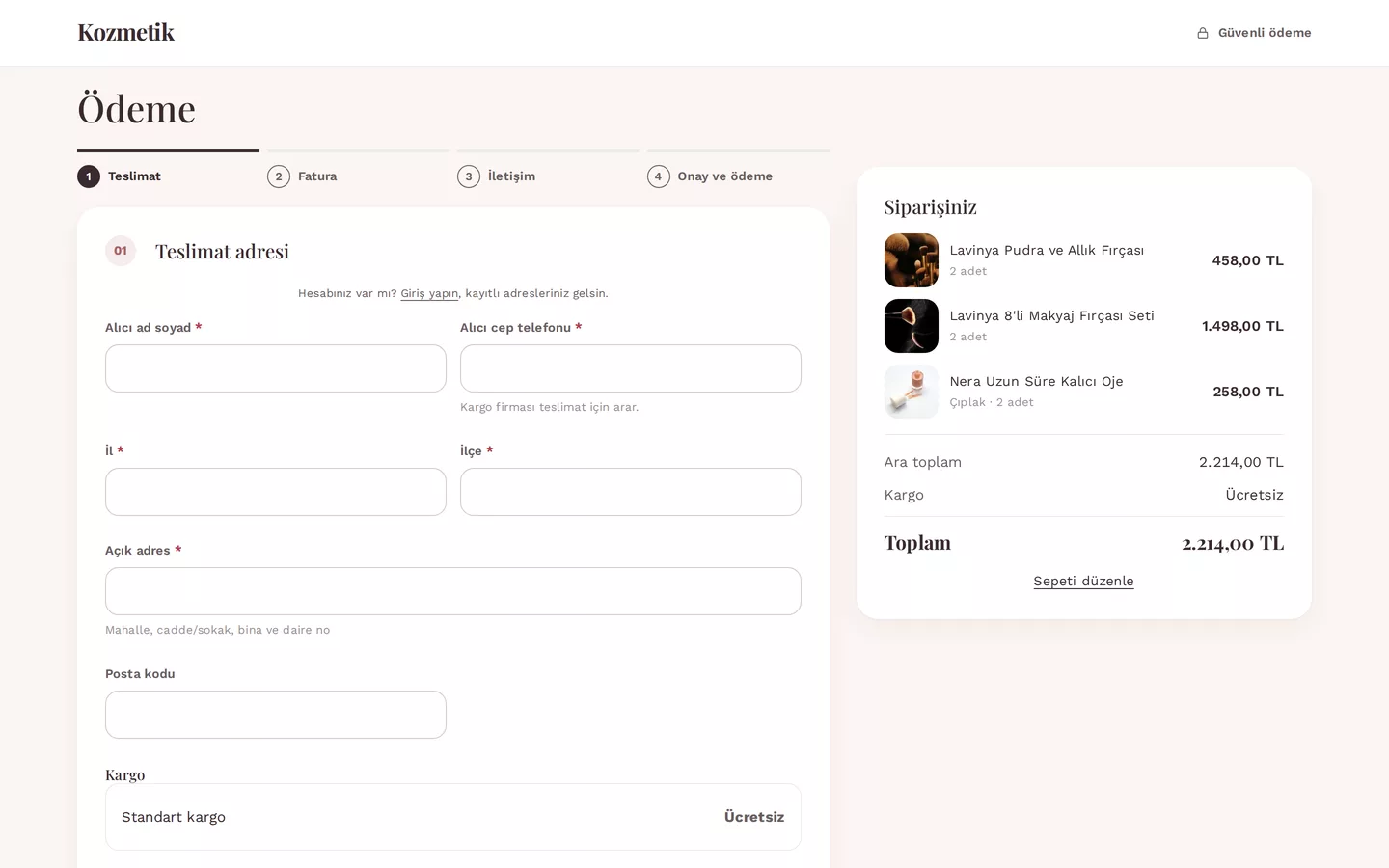
One of the first decisions a small store makes is which payment methods to offer customers. Each method appeals to a different customer segment, but each has distinct impacts on collection speed, cancellation risk, and stock management. The right mix depends on your products and customers.
Card payment: fast collection, low cancellation
With card payment, the order is confirmed once the payment provider approves it; stock is deducted immediately. Customers may request instalments; in SmartSales, you determine the maximum number of instalments up to 12. Card details are entered into the payment provider's form and never touch the store's server, providing peace of mind regarding security and liability for small stores.
Bank transfers and EFT: orders pending until payment arrives
For bank transfers, the customer places the order and pays later. SmartSales keeps bank transfer orders open for 48 hours by default; stock is reserved only for the first 2 hours. This prevents unpaid orders from locking your catalogue. Expired bank transfer orders are cancelled, and reserved stock is released.
Cash on delivery: trust-building but risky
Cash on delivery builds trust for first-time shoppers, but the shipping cost of undeliverable packages falls on the store. There are three ways to manage this risk:
- Add a fee for cash on delivery; the fee is added only to the total of customers who choose this method and is locked to the order.
- Mark numbers that did not receive delivery in the customer list; marked phone numbers cannot select cash on delivery.
- Cash on delivery is already disabled for digital products.
How do unpaid orders affect stock?
The amount is locked when the customer proceeds to payment, and stock is temporarily reserved. Unpaid orders are cancelled at the end of the period. There is also a limit on the number of unpaid orders a single person can hold simultaneously, preventing one individual from consuming stock with fake orders. Orders arriving at the same time are processed sequentially; one item is not sold to two people.
Which mix suits you best?
- Card payments and cash on delivery work well together for low-value, frequently purchased products.
- For high-value products, use card and bank transfer; consider adding a fee for cash on delivery.
- If you have corporate customers, bank transfers are expected; invoice details are collected at the payment step.
How SmartSales solves this
- Three payment methods: Card, bank transfer, and cash on delivery are available in the same payment step; you can toggle cash on delivery on or off.
- Stock protection: Unpaid orders are cancelled upon expiry, releasing the stock.
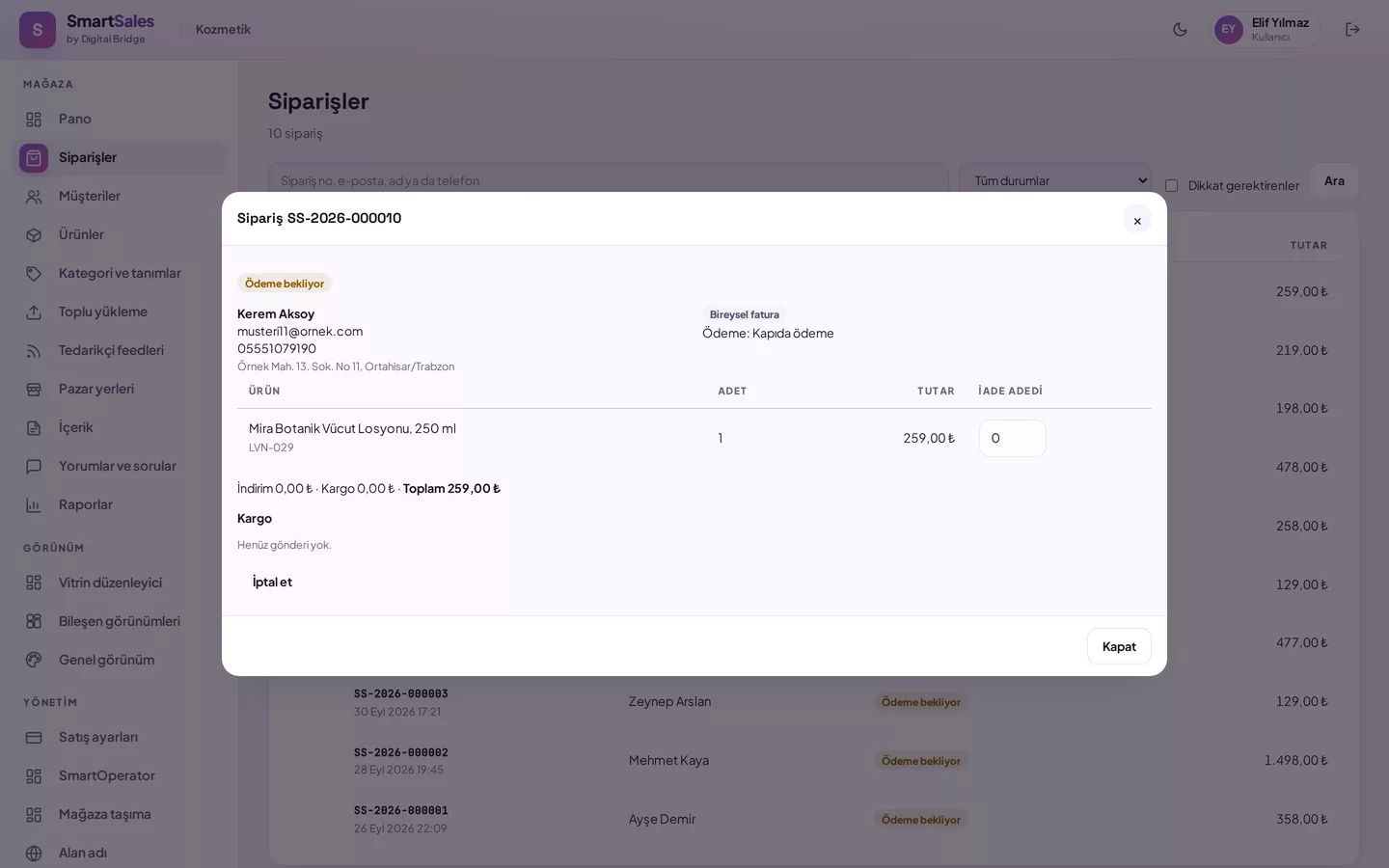
- Single order screen: Payment method, status, and line items are displayed together in the order details.